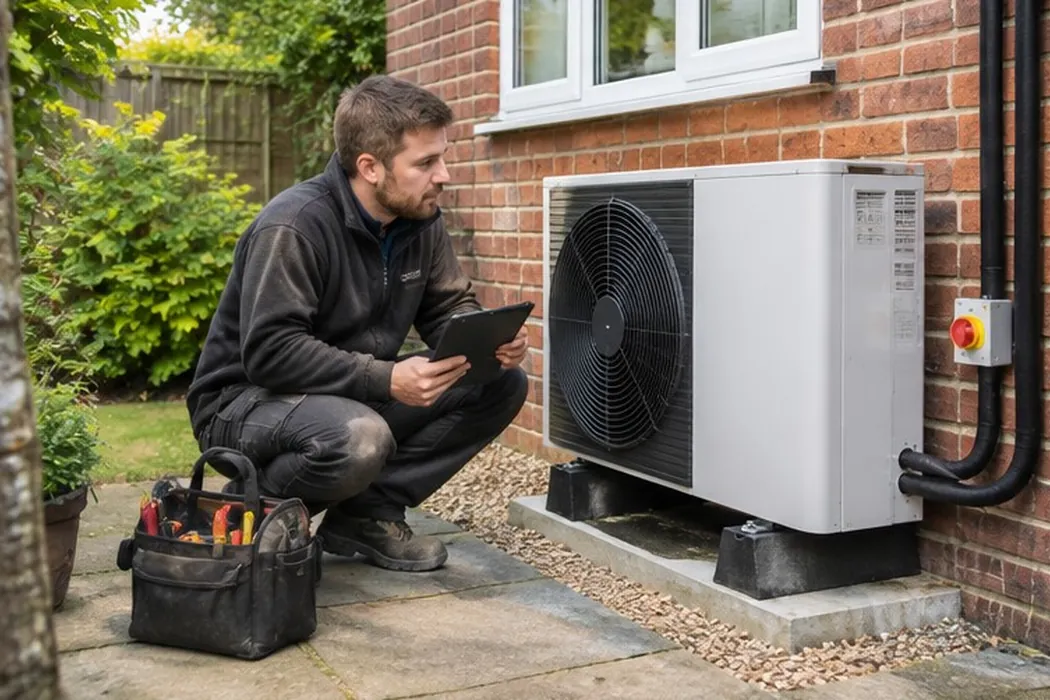
Talk about suitability before selling equipment
A heating replacement enquiry is not a request for a commodity. Existing emitters, insulation, heat loss, hot-water demand, access and the customer’s expectations all affect the conversation. A clear website should say what the survey assesses and whether a property may need further improvements.
Do not assert that every house is suitable for the same unit or imply that an online questionnaire can replace a competent heat-loss assessment.
Actions to take this month
- Write a transparent suitability and survey page
- Verify all displayed MCS and consumer-protection claims
- Create separate contact paths for urgent and planned work
- Review monthly qualified surveys and installation wins
Separate emergency boiler replacements from planned changes
A household with failed heating often needs an urgent response, while a planned low-carbon upgrade involves comparing technologies, disruption and running costs. Those searches deserve different landing-page advice and different contact paths.
Make it clear whether you offer emergency work, planned design-and-install projects, servicing or some combination. Do not promise installation lead times unless the diary supports them.
Explain the grant conversation accurately
For England and Wales, the Boiler Upgrade Scheme is installer-led and eligibility depends on the property and technology. Homeowners need to understand that MCS-certified installers apply on their behalf and that scheme terms can change.
Link to the current Ofgem and GOV.UK guidance; avoid a blanket claim that every visitor will receive funding or that a quoted price applies before assessment.
| Customer situation | Useful first answer | Appropriate next step |
|---|---|---|
| Planning a heat pump | What property survey and suitability assessment involves | Book a qualified assessment |
| Heating has failed | What urgent response is actually offered | Clarify emergency availability |
| Asking about a grant | Whether eligibility must be confirmed | Refer to current official scheme details |
Replace vague trust badges with useful evidence
Show real projects with permission, describing the former system, the survey approach, the chosen layout and the handover. Explain genuine qualifications, consumer protection arrangements and the support offered afterwards.
A detailed explanation of what happens before, during and after the work is often more convincing than an unsupported claim of being the “number one local installer”.
Capture the details that help you decide next steps
Offer a brief enquiry form requesting property type, broad heating system, postcode, timescale and whether the owner wants a suitability discussion. Keep sensitive information optional and collect only what is necessary.
Respond with a clear next step instead of a generic auto-reply that immediately tries to sell a product.
Could more suitable customers find your business?
Request a free review of your website and local visibility, with no obligation to buy a service.
See How Your Business Could Improve →Monitor qualified projects rather than raw leads
Count surveys, written proposals and installs won by project type and catchment area. If the enquiry-to-survey rate is weak, improve explanations of eligibility and likely steps. If surveys are common but proposals are rejected, review clarity and qualification before buying more marketing.
Questions worth answering
Can you promise a government grant?
No. Always explain eligibility and link to the live scheme guidance.
Can an online quote replace a heating design?
No. Online information can screen enquiries, but system design and pricing require appropriate assessment.
Further reading: official guidance. Check current requirements before relying on regulatory or eligibility information.