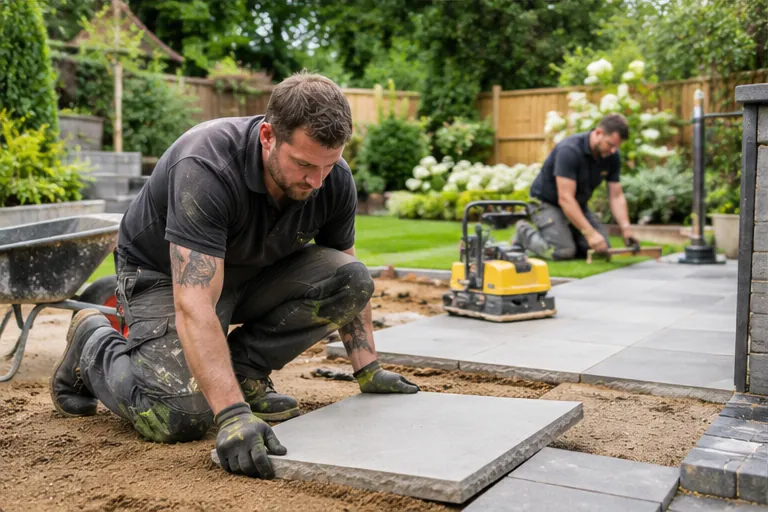
Choose the work you want your diary to contain
“Landscaping” means different things to different customers. It might mean a modest garden tidy-up, regular maintenance, a new patio, fencing, drainage or a complete redesign. If your website mixes all these services together without explanation, the wrong customers may contact you.
Choose a small number of services that suit your team and the equipment you own. Create clear descriptions of those services and explain what details a customer should provide before you can quote. A firm specialising in hard landscaping should not sound identical to a garden-maintenance business.
Turn completed gardens into useful proof
Before-and-after photos can be convincing when they are real and accompanied by context. Ask permission to photograph the property and avoid showing identifying details without agreement. Explain the materials, challenges and scope of work, not just “another happy customer”.
For a patio, that might mean surface area, access constraints, removal of an old surface, drainage considerations and the material chosen. For a garden renovation, show a few stages so potential customers understand the scope and care involved.
Use accurate descriptions and do not promise that a photograph from one project predicts an identical result or price for another property.
Plan your marketing before the busiest season
Landscaping interest can vary with the weather, but you should plan around your own enquiry history rather than assuming a fixed national peak. This sample calendar is a planning framework, not a prediction of future demand:
| Period | Useful marketing work | Why it helps |
|---|---|---|
| Winter | Sort photographs, improve service pages, plan outreach to referral partners | Customers researching future projects can understand your work |
| Early spring | Check availability messaging, update recent projects, follow up suitable estimates | Makes it easier to convert people who are ready to plan |
| Summer | Photograph finished jobs and ask for honest customer feedback | Builds evidence for the next buying cycle |
| Autumn | Review enquiry sources, evaluate seasonal services and schedule website updates | Helps reduce dependence on last-minute advertising |
If your business runs all year or specialises in commercial contracts, adapt the plan to actual buying cycles in your area.
Make the right projects easier to request
For bigger landscape projects, ask enough to establish whether the work fits. A simple initial contact process can invite the customer to describe the work, give their town, provide approximate dimensions and identify whether they have a design or photographs. Avoid requiring excessive personal information just to begin a conversation.
Respond with the next step. If a site visit is needed, explain what happens before and afterwards. If the business is fully booked, say so rather than letting enquiries disappear.
The three numbers worth recording
- Suitable enquiries: requests that match your services and working area.
- Site surveys or quotes: enquiries that progress to a meaningful discussion or written price.
- Jobs accepted: the work actually booked, measured against your direct costs.
A channel may produce fewer leads and still be the better investment if the customers are a stronger fit. Keep a basic spreadsheet by month and source; you do not need sophisticated software.
Grow outside a single lead platform
Local builders, garden designers, suppliers, estate agents and previous customers can all be relevant referral partners, depending on your work. Make genuine introductions and keep expectations clear. Online, accurate local business information and helpful service pages give customers a way to check you before enquiring.
Google's guidance on local ranking highlights relevance, distance and prominence. Nobody can guarantee map positions. Your priority should be a complete, truthful profile and a website that answers the questions a prospective customer is likely to ask.
For a wider marketing comparison, see our advertising guide for tradespeople, including how to compare the cost of paid enquiries.
Four practical actions to take this month
1. Identify the two landscaping services you want to sell more often. 2. Publish a properly explained project example for each. 3. Make your enquiry process and service areas unambiguous. 4. Compare actual jobs won by source before changing your advertising spend.
If you have a good portfolio but the right homeowners cannot find it, request a free website visibility review. We'll examine your online presentation and explain practical opportunities without promising a set number of enquiries.